

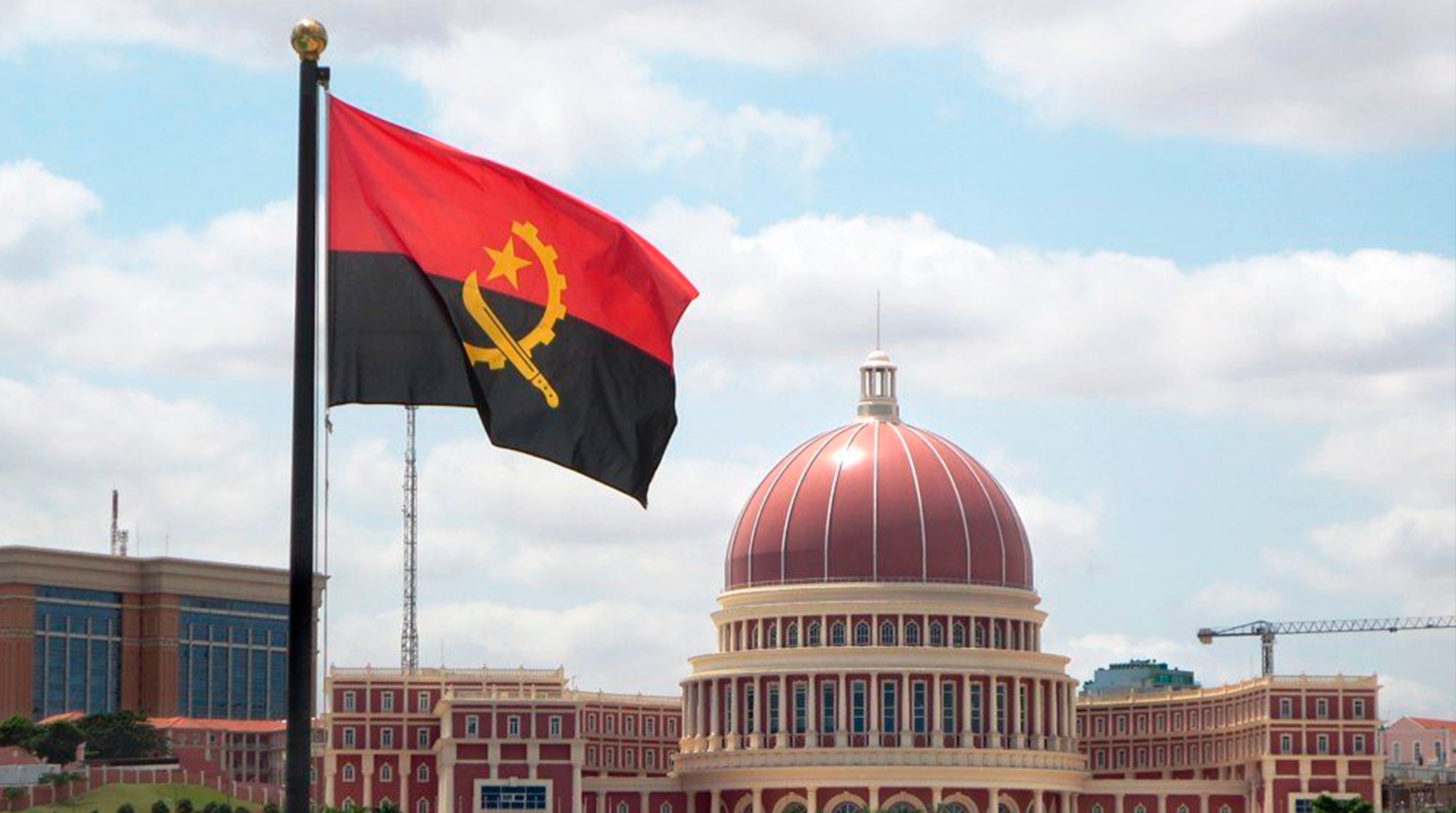

Something unusual happened in Angola.
The National Assembly approved, in principle, the proposed Startup Law unanimously, with no votes against.
It matters politically because unanimous approval is rare. But it matters even more economically, because it sends a clear message: innovation, technology and entrepreneurship are no longer being treated as side conversations in Angola. They are beginning to be seen as part of the country’s development agenda.
I had the privilege of being part of the working group around this process and of witnessing that parliamentary moment firsthand. What stood out was not only the approval itself, but what it represented: different political actors, with different visions, finding common ground around the idea that Angola needs a more modern legal framework for innovation.
That is worth celebrating.
For founders, investors, operators and technology enthusiasts around the world, this is more than a local legislative development. It is a signal that one of Africa’s most promising and under-discussed markets is taking a deliberate step toward building a more structured environment for startups and digital innovation.
And for Angola, this could be the beginning of something much bigger.
For years, one of the main barriers facing startups in Angola has not been a lack of talent or ideas. It has been the absence of a legal and institutional environment designed for the reality of innovative businesses.
A startup is not just a small company with a digital product. A startup is built to experiment, adapt, grow fast and scale. Its risks are different. Its capital needs are different. Its business model is different. And when the law does not recognize that, entrepreneurs are forced to operate in a grey zone.
They are treated like traditional companies before they have had the chance to become sustainable. They face fiscal pressure too early. They struggle to access capital. And they are often excluded from meaningful market opportunities, including public procurement.
That is why a Startup Law matters. It creates legal recognition where there was ambiguity.
It gives founders greater certainty.
It helps investors understand the market better.
And it tells institutions that innovation deserves its own tools.
For Angola, this is especially important because the country’s opportunity in technology is real.
Too often, Angola is viewed only through the lens of oil, macroeconomic cycles or infrastructure gaps. But Angola is also a young country, an entrepreneurial country and a country where technology can solve real problems at scale.
This is a market where fintech can expand inclusion, where logistics tech can improve efficiency, where edtech can widen access to learning, where healthtech can extend services, and where digital platforms can connect people to opportunity in powerful ways.
The question has never been whether Angola needs innovation. It clearly does.
The question has been whether Angola would build the legal and regulatory conditions that allow innovation to move from isolated effort to structured growth.
This Startup Law suggests that answer may finally be yes.
The direct benefits are significant.
First, legal recognition reduces friction. When institutions do not know what a startup is, everything becomes harder: registration, compliance, taxation, access to support and engagement with investors. A proper legal category creates clarity, and clarity attracts confidence.
Second, a better framework can give innovation room to breathe. Startups usually invest before they earn. They spend on product, talent, compliance, customer acquisition and iteration long before they become stable businesses. When a country recognizes that and adjusts its framework accordingly, it is not creating a shortcut. It is creating oxygen.
Third, institutional recognition helps unlock capital. No serious startup ecosystem grows without patient, risk-aware capital. Once a legal category exists and support mechanisms begin to form, startups become easier to understand for investors, accelerators and strategic partners. That does not solve the funding gap overnight, but it changes the starting point.
Fourth, a better framework helps retain talent. In many emerging markets, one of the biggest risks is not the lack of ideas, but the migration of ambitious builders toward ecosystems that make innovation easier to fund, formalize and scale. A stronger startup environment gives more young Angolans a reason to build locally.
But this moment should be seen as a beginning, not the finish line.
The unanimous approval is a very positive step, and it deserves recognition. At the same time, because this moment is so important, it is also the right time to ask how the law can become more inclusive, more realistic and more growth-oriented.
This is not about opposing the government or diminishing the work already done. Quite the opposite. It is about helping a good step become a stronger one.
In my view, any truly transformative Startup Law for Angola should stand on four pillars.
The first is eliminating legal ambiguity. A startup must be clearly defined in a way that reflects innovation, repeatability and scalability, not simply company size.
The second is reducing the early-stage fiscal burden. Startups create value differently from traditional firms and need a window of growth before being treated like mature businesses.
The third is improving access to risk capital. No ecosystem can rely only on founder resilience. Angola needs a stronger bridge between innovation and venture capital, angel investors, guarantees and smarter financing instruments.
The fourth is opening access to market. Startups do not scale on visibility alone. They scale on customers. And in Angola, the state remains one of the largest consumers of goods and services. A modern framework should therefore create pathways for startups to serve public institutions through pilots, innovation-friendly procurement models and more realistic qualification rules.
This is also where I believe the law can still be improved.
The most important area for reflection is the scope of inclusion.
The current public framing of the law reportedly points to a relatively low annual revenue cap and a relatively short maximum age for startups to qualify. I understand the logic behind that. Policymakers want to target emerging businesses.
But the reality of startup growth in emerging markets is more complex.
Tech startups are built to scale. If the revenue threshold is set too low, a company can quickly outgrow the law while still facing the same structural barriers that define startup life. The same applies to age limits. In a mature ecosystem, five years may be a reasonable cut-off. In Angola, where many startups have spent years operating without a dedicated legal framework, limited access to venture capital and slower market absorption, that limit may be too narrow.
Some of Angola’s most resilient innovators are older than five years and still face startup realities.
That is why I believe Angola would benefit from a broader and more inclusive definition, one that better reflects both the scalable nature of technology startups and the longer maturation cycle typical of emerging ecosystems.
A more expansive threshold would not weaken the law. It would strengthen its relevance.
What is happening in Angola should not be read simply as a policy update. It should be read as part of a bigger question: what kind of economy does Angola want to build over the next decade?
If the answer includes diversification, digital infrastructure, competitiveness, youth opportunity and a stronger role in Africa’s innovation landscape, then this law is not peripheral. It is strategic.
Innovation ecosystems do not emerge by accident. They emerge when talent, policy, capital and market access begin to align.
That alignment is still incomplete in Angola. But a unanimous parliamentary step in favor of innovation is not a small thing. It is a meaningful signal that the process has begun.
For the global tech community, this is the moment to pay closer attention.
Angola has taken an important step.
Now the opportunity is to make sure the final law is broad enough, smart enough and future-oriented enough to help build the innovation economy the country truly deserves.

01 Apr 2026
Something unusual happened in Angola — and the global tech ecosystem should pay attention
Learn More


04 Dec 2025
From Literacy to Empowerment: How Digital Financial Education Can Unlock Economic Growth in Africa
Learn More
07 Nov 2025
Breast Cancer in Africa: Technological Solutions for Early Diagnosis, Effective Treatment, and Improved Recovery
Learn More